

Lantana camara (common lantana) is a species of flowering plant within the verbena family (Verbenaceae), native to the American tropics. Other common names of L. camara include big-sage (Malaysia), wild-sage, red-sage, white-sage (Caribbean), tickberry (South Africa),West Indian lantana, and umbelanterna.
As an ornamental, L. camara is often cultivated indoors, or in a conservatory, but can also thrive in a garden with sufficient shelter.It has spread from its native Central and South America to around 50 countries, where it has become an invasive species. It first spread out of the Americas when it was brought to Europe by Dutch explorers and cultivated widely, soon spreading further into Asia and Oceania where it has established itself as a notorious weed, and in Goa it was introduced by the portuguese.
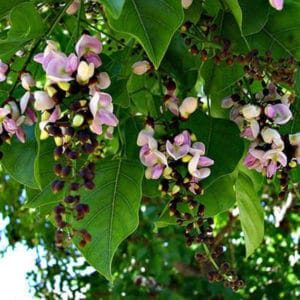
Flower : solitary; small tubular shaped flowers, which each have four petals and are arranged in clusters in terminal areas stems. Flowers come in many different colours, including red, yellow, white, pink and orange, which differ depending on location in inflorescences, age, and maturity.The flower has a tutti frutti smell with a peppery undertone. After pollination occurs the colour of the flowers changes (typically from yellow to orangish, pinkish, or reddish); this is believed to be a signal to pollinators that the pre-change colour contains a reward as well as being sexually viable, thus increasing pollination efficiency.
Fruit : berry-like drupe which turns from green to dark purple when mature. Green unripe fruits are inedible to humans and animals alike.
Edible parts : Fruit (Wild Fruit)
Ayurvedic usage : Catarrh, snake bites, Oedema of the Joints
Height : 3 m tall
Leaves : Broadly ovate, opposite, and simple and have a strong odour when crushed
Related medicinal properties : Leaves and Roots


Reviews
There are no reviews yet.