

Mangoes are juicy stone fruit (drupe) from numerous species of tropical trees belonging to the flowering plant genus Mangifera, cultivated mostly for their edible fruit.
The majority of these species are found in nature as wild mangoes. The genus belongs to the cashew family Anacardiaceae. Mangoes are native to South Asia, from where the “common mango” or “Indian mango”, Mangifera indica, has been distributed worldwide to become one of the most widely cultivated fruits in the tropics. Other Mangifera species (e.g. horse mango, Mangifera foetida) are grown on a more localized basis.
It is the national fruit of India and Pakistan, and the national tree of Bangladesh. It is the unofficial national fruit of the Philippines.
Height : 35–40 m (115–131 ft) tall, with a crown radius of 10 m (33 ft)
Leaves : 12-25, Veins prominent on lower face, tertiary nerves and veins reticulate. Young leaves pendulous, purplish
Related medicinal properties : Helps to keep heart healthy, Purifies blood
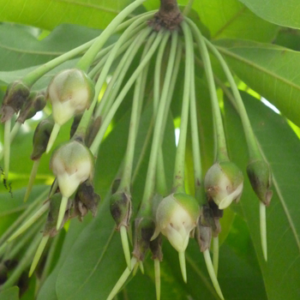
Flower : petals ovoid-oblong,c.3-5 mm, white, later get tinged with purple, with yellow or purple veins. Fertile stamens as long as the corolla. Staminodes very short.
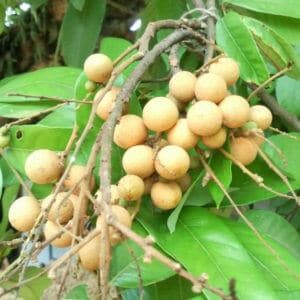
Fruit : ovoid to ellipsoid, with oblique base, 10-20 cm long.
Edible parts : Fruit used in sweet and savoury cuisines and as a dessert.
Ayurvedic usage : Constipation, Swellings, Fevers, Endometritis.

Reviews
There are no reviews yet.