

Spondias dulcis (syn. Spondias cytherea), known commonly as ambarella (ඇඹරැල්ලා) in Sri Lanka or June plum is an equatorial or tropical tree with edible fruit containing a fibrous pit. It is known by many other names in various regions, including kedondong in Indonesia and in Malaysia, ambra in Malaysia.
Spondias dulcis has been introduced into tropical areas across the world. It was brought to Jamaica in 1782, and it is cultivated in Panama, Cuba, Haiti, the Dominican Republic, Puerto Rico, Trinidad and Tobago, and eastern Sucre in Venezuela. The United States Department of Agriculture received seeds from Liberia in 1909, but it did not become a popular crop in the US. Nevertheless, it is grown in South Florida as far north as Palm Beach County. The fruit is also widely grown in Somalia’s agriculture belt, probably introduced during the colonial times preceding 1960.
Height : 20 m (66 ft), averages 10–12 m (30–40 ft)
Leaves : 20–60 cm (8–24 in) in length, composed of 9 to 25 glossy, elliptic or ovate-oblong leaflets
Uses : Spondias dulcis is most commonly used as a food source. In West Java, its young leaves are used as seasoning for pepes. In Costa Rica, the more mature leaves are also eaten as a salad green though they are tart. However, it is most commonly used for its fruit.
Leaflets : 9–10 cm (3.5–3.9 in) long, which are finely toothed toward the apex.
Flower : small, inconspicuous white flowers in terminal panicles.
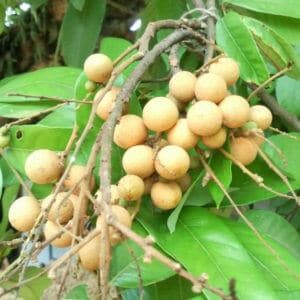
Fruit : oval fruits, 6–9 cm (2.4–3.5 in) long, are borne in bunches of 12 or more on a long stalk.

Reviews
There are no reviews yet.